All Categories
Featured
Table of Contents
Walmart's vendor-managed model, on the other hand, means providers can access their own information from Walmart's information system and have more control over their stock management requirements. Source: Efficient starts with comprehending what you have in stock, how it's carrying out, and when you'll need more of it. You need to keep accurate records for each item and guarantee your system updates each time there's a change to the stock.
Each company has different concerns, so you ought to identify what you desire to attain with a stock management system. JIT or dropshipping methods can assist.
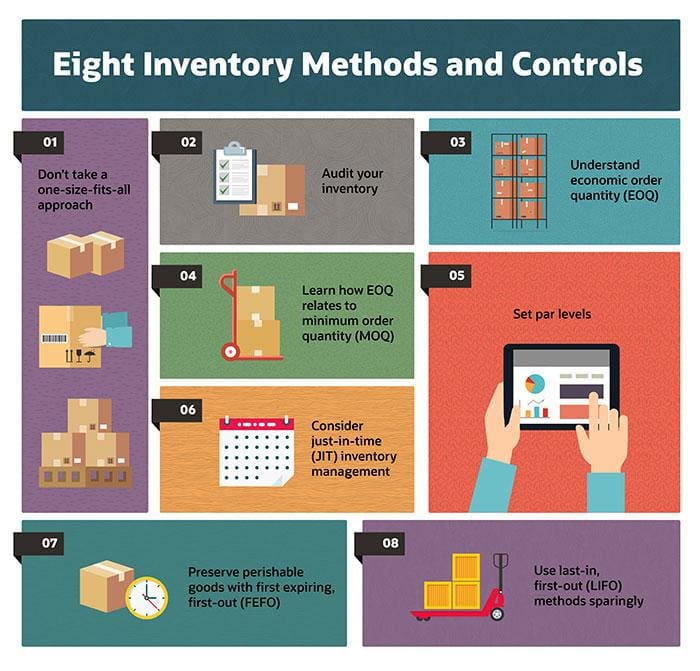
There's a strong case for automation in inventory management, but sometimes there's room for the human touch. Manual stock counting acts as a backup for your digital systems, and it works for counting low amounts of high-value products. You're more most likely to discover obsolete, stolen, or damaged stock if you check it in individual.
Reducing Overhead through Smart Team Scheduling
Then consider the methods you can address them. Typically, this will be through using technology. For instance, introducing barcode scanners will help warehouse staff locate the best products and optimizing warehouse designs will save them time. You might also update your packaging to prevent broken deliveries. It's essential to keep a strong relationship with your providers, and it's not practically understanding preparations.
You ought to monitor your providers' efficiency and ensure you're getting the very best value. Brightpearl provides you a devoted website for supplier management. Manual inventory management techniques used to be widespread, and some small companies still utilize them. The problem is that handbook work is time-consuming and error-prone. Paper records can easily be lost or damaged.
Achieving Financial Sustainability through AutomationAnd the bigger your inventory gets, the more difficult it is to track manually. By taking stock management online, you can digitize your records, automate processes, and keep whatever in one location. The system needs to upgrade automatically whenever there's a modification. Alongside increased presence, many online systems consist of analytics, reporting, and forecasting capabilities to inform your stock planning and assist determine growth opportunities.
Reducing Store Overhead through Smart Team Scheduling
As you're responsible for upkeep and upgrades, you'll require an in-house IT teamnot to point out area to keep large servers. The alternative is a cloud-based option, where all your systems and data are housed and maintained by your service provider, and your whole group can access the system from anywhere. Cloud-based inventory management makes it easy to scale, as you pay a flat month-to-month subscription and include more users or functions when you require them.
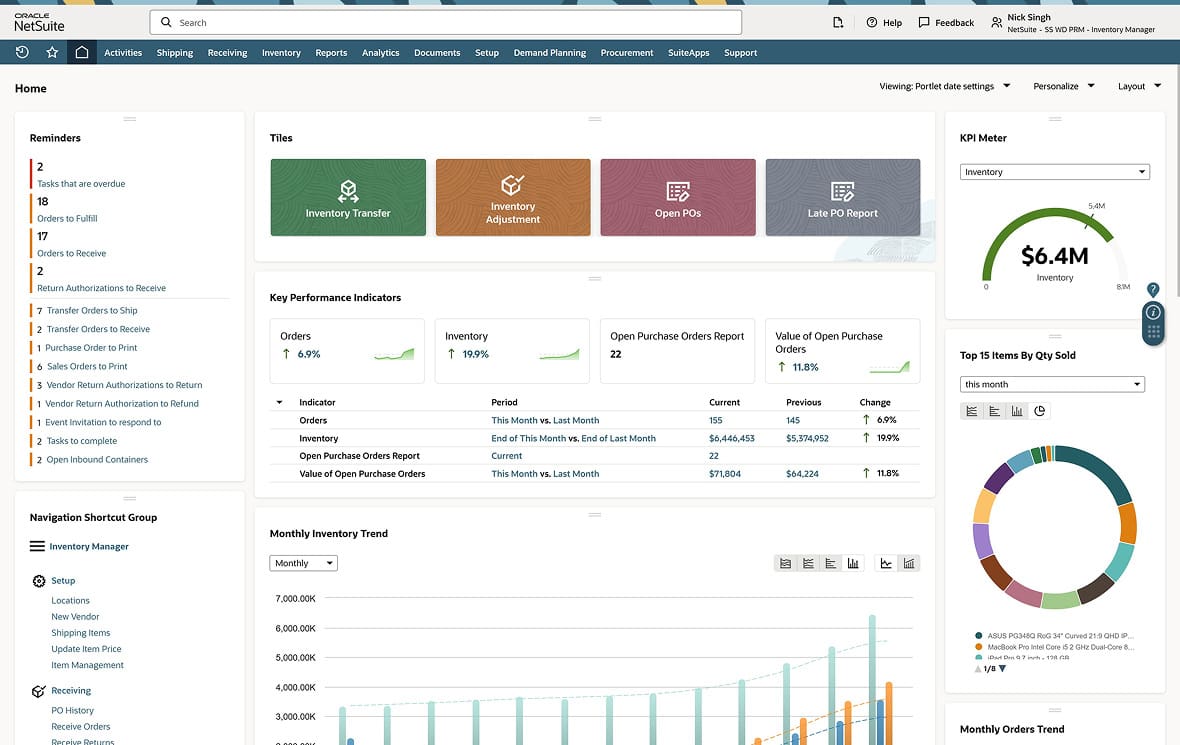
Here are a few alternative solutions and how they accumulate: Source: NetSuite is a modular ERP system that consists of inventory control. It offers a real-time view of stock and decreases manual processes with automatic tracking. It makes it possible for multi-location satisfaction, demand-based replenishment, cycle counting, and lot and serial tracing. The flexible functions suggest there's a high learning curve, though.
Achieving Financial Sustainability through Automation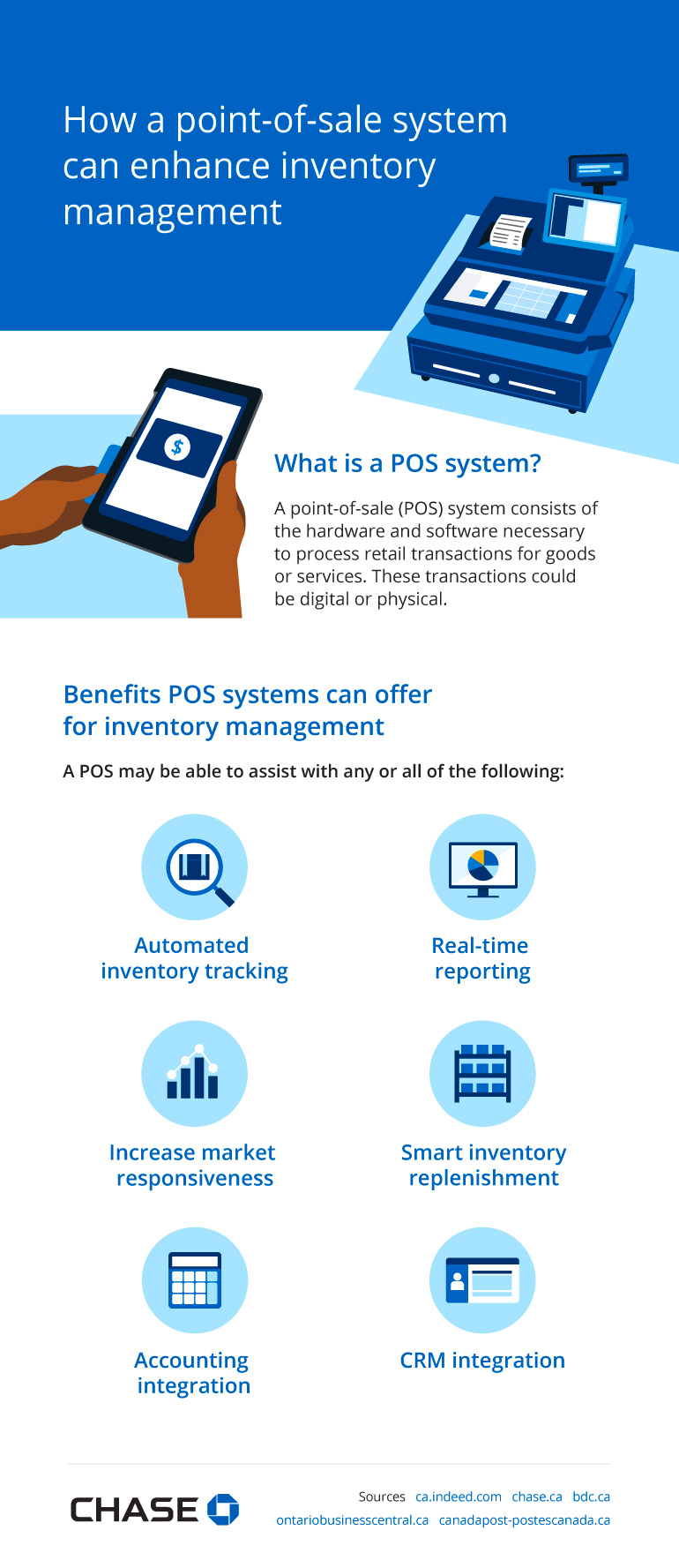
It does not have lots of integrations, doesn't use APIs, and charges additional for Shopify Adapter. If you're an omnichannel retailer, you'll likely require personalizations to fulfill your requirements.
There's also a one-time implementation fee. Source: QuickBooks Commerce is a B2B-focused cloud-based system that makes up stock management, order processing, and supply chain management.
It's designed to work effortlessly with QuickBooks Online's accounting suite, but Commerce is just available as part of that package. It's still budget friendly, presently $52.50/ month for the very first 3 months (regular cost: QuickBooks Commerce $50/month and QuickBooks Online Essentials $55/month). If you currently have QB Online, you can include Commerce for $25/month for the very first 3 months.
Proven Cost Reduction Tactics for Storefronts
Usually, the features are less innovative than Brightpearl, specifically when it comes to personalized workflow automation. The site describes QB Commerce as "presently readily available to a minimal group of clients" and mentions a wait-list.
It has order management automation (consisting of order) and demand forecasting with real-time data and the ability to manage provider relationships. There are 70+ marketplaces and multichannel integrations, and you can link major carriers and satisfaction services. However it doesn't have actually incorporated real-time accounting or native integrations to third-party accounting software application.

Latest Posts
The Step-By-Step Modern SME Loan Application Checklist
Small Retail Accounting Guidelines to Drive Growth
The Detailed Guide to Modern SME Funding Prerequisites